The global energy industry is entering a new era of digital transformation. As renewable energy adoption accelerates, governments and enterprises are searching for technologies that improve efficiency, transparency, and sustainability. Consequently, blockchain has become one of the most promising technologies for modernizing energy infrastructure.
According to recent market research, the global blockchain-in-energy market is valued at approximately USD 3.46 billion in 2026 and is projected to reach nearly USD 9.92 billion by 2031, reflecting strong enterprise adoption among utilities, renewable energy providers, and grid operators.
Furthermore, artificial intelligence, IoT, decentralized physical infrastructure networks (DePIN), and tokenized energy assets are reshaping how electricity is generated, distributed, and consumed. Therefore, organizations investing in blockchain today are preparing for a smarter, cleaner, and more resilient energy ecosystem.
At BSEtec, we help energy companies embrace this transformation with secure, scalable, and enterprise-grade blockchain solutions designed for the future of energy.
Why the Energy Industry Needs Blockchain in 2026
Traditional energy systems rely on multiple intermediaries for billing, energy trading, compliance, and infrastructure management. However, these centralized systems often create inefficiencies, delays, and security challenges.
Blockchain addresses these issues by creating a decentralized ledger where every transaction is securely recorded, verified, and shared among authorized participants. As a result, organizations can automate operations, reduce fraud, and improve operational transparency.
Moreover, blockchain integrates seamlessly with AI, IoT devices, smart meters, and renewable energy systems, making it an ideal technology for the next generation of intelligent power networks.
Top Blockchain Use Cases in the Energy Sector
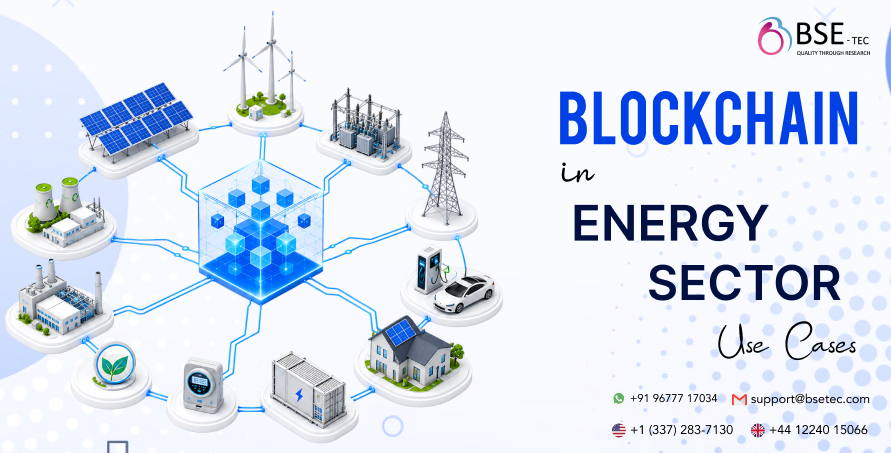
1. Peer-to-Peer Energy Trading
One of the most significant blockchain applications is peer-to-peer (P2P) energy trading. Instead of selling excess solar power back to utility companies at lower prices, homeowners and businesses can directly trade electricity with nearby consumers.
Consequently, blockchain eliminates unnecessary intermediaries while ensuring every transaction remains secure and transparent.
Benefits: Lower electricity costs, Instant settlements, Transparent pricing, Increased renewable energy adoption, and Higher returns for solar energy producers
This decentralized trading model is becoming increasingly popular in smart cities and renewable energy communities.
2. Smart Grid Management
Modern smart grids generate enormous amounts of operational data every second. However, managing this information securely remains a major challenge. Blockchain enables real-time verification of energy generation, transmission, and consumption across distributed networks.
Furthermore, integrating blockchain with IoT sensors allows utilities to detect equipment failures instantly, optimize energy distribution, and reduce outages.
Advantages: Real-time monitoring, Automated grid balancing, Improved reliability, Reduced transmission losses, and Better demand forecasting
At BSEtec, we develop blockchain-powered smart grid platforms that enhance grid efficiency while improving operational visibility.
3. Renewable Energy Certificate (REC) Management
As renewable energy adoption grows worldwide, businesses must prove the origin of clean electricity.
Renewable Energy Certificates (RECs) verify that electricity has been generated from renewable sources. However, traditional REC management systems often suffer from duplication and manual verification.
Blockchain creates immutable digital certificates that cannot be altered or duplicated.
Therefore, organizations can easily verify renewable energy generation while ensuring regulatory compliance.
Key benefits: Fraud prevention, Faster certificate verification, Simplified auditing, and Transparent ownership history
4. Tokenized Renewable Energy Assets
One of the biggest trends in 2026 is the tokenization of renewable energy assets. Instead of investing millions in solar farms or wind projects, investors can purchase digital ownership tokens representing a fraction of these assets.
Consequently, tokenization improves liquidity while opening renewable energy investments to global investors. This trend is attracting utilities, investment firms, and infrastructure developers seeking alternative funding models.
BSEtec specializes in developing secure blockchain platforms for tokenized real-world assets, including renewable energy projects.
5. AI-Powered Smart Energy Management
Artificial Intelligence and blockchain now work together to optimize energy consumption. AI analyzes consumption patterns, predicts demand, and automatically adjusts power distribution.
Meanwhile, blockchain securely records every AI-driven decision, creating complete transparency and auditability.
Together, these technologies enable Predictive maintenance, Demand forecasting, Automated billing, Intelligent energy optimization, and Reduced operational costs
This combination represents one of the fastest-growing enterprise blockchain applications in 2026.
6. Electric Vehicle (EV) Charging Networks
The rapid growth of electric vehicles requires intelligent charging infrastructure. Blockchain enables secure communication between EV owners, charging stations, and utility providers.
Furthermore, smart contracts automate billing immediately after charging sessions are completed.
Advantages: Automatic payments, Cross-network charging compatibility, Transparent pricing, and Reduced administrative costs
As EV adoption continues to increase globally, blockchain will become a key technology supporting future charging ecosystems.
7. Carbon Credit Trading
Governments and enterprises increasingly rely on carbon credit programs to achieve sustainability goals. However, traditional carbon markets often face transparency and verification issues. Blockchain records every carbon credit transaction on an immutable ledger.
Consequently, organizations can verify ownership, prevent double spending, and simplify regulatory reporting.
Benefits: Secure trading, Transparent ownership, Fraud prevention, Faster settlements, and Improved compliance
8. Energy Supply Chain Transparency
Energy companies operate highly complex supply chains involving fuel suppliers, equipment manufacturers, logistics providers, and distributors.
Blockchain enables complete visibility across every stage of the supply chain.
For example, organizations can monitor Equipment origin, Fuel transportation, Maintenance records, Vendor certifications, and Component lifecycle. As a result, operational risks decrease while compliance improves significantly.
9. DePIN: The Next Evolution of Energy Infrastructure
One of the biggest blockchain trends in 2026 is Decentralized Physical Infrastructure Networks (DePIN).
Instead of relying solely on centralized infrastructure, DePIN enables communities and organizations to build decentralized energy networks supported by blockchain. These networks allow participants to contribute solar power, battery storage, and charging infrastructure while receiving blockchain-based incentives.
Therefore, DePIN creates a more resilient, scalable, and community-driven energy ecosystem.
BSEtec helps businesses design DePIN-powered blockchain platforms for the future of decentralized energy.
Why Enterprises Choose BSEtec
Blockchain implementation requires far more than smart contract development. Organizations need secure architecture, regulatory compliance, scalable infrastructure, API integrations, and ongoing technical support.
That is where BSEtec delivers value.
Our blockchain experts provide:
- Enterprise blockchain development
- Smart contract development
- Tokenization platforms
- Renewable energy marketplaces
- Carbon credit platforms
- AI-integrated blockchain solutions
- Private blockchain networks
- Blockchain consulting and deployment
From startups to large enterprises, BSEtec develops future-ready blockchain solutions that accelerate digital transformation across the energy sector.
Business Benefits of Blockchain in Energy
Organizations adopting blockchain gain several competitive advantages.
These include enhanced transparency, improved cybersecurity, Faster transaction settlements, Lower operational costs, Automated workflows, Better regulatory compliance, reduced fraud, Increased customer trust, Improved renewable energy adoption, and Scalable digital infrastructure
Therefore, blockchain is no longer an experimental technology—it has become a strategic investment for modern energy companies.
The Future of Blockchain in Energy
Looking ahead, blockchain will continue driving innovation across global energy markets. Moreover, AI-powered energy agents, tokenized renewable assets, decentralized energy trading, and intelligent smart grids will redefine how electricity is produced and distributed.
As enterprises accelerate digital transformation, blockchain will become the backbone of secure, transparent, and automated energy ecosystems.
Consequently, organizations that invest today will gain significant competitive advantages over those relying on outdated centralized systems.
Conclusion
The energy sector is evolving rapidly, and blockchain is at the center of this transformation. From peer-to-peer energy trading and AI-powered smart grids to carbon credit management, DePIN, and tokenized renewable assets, blockchain enables businesses to operate more efficiently while supporting global sustainability goals.
At BSEtec, we empower energy companies with secure, scalable, and innovative blockchain solutions tailored for the future. Whether you’re building a decentralized energy marketplace, automating smart contracts, or launching a renewable energy platform, our team delivers enterprise-grade blockchain development services that help you stay ahead in 2026 and beyond.