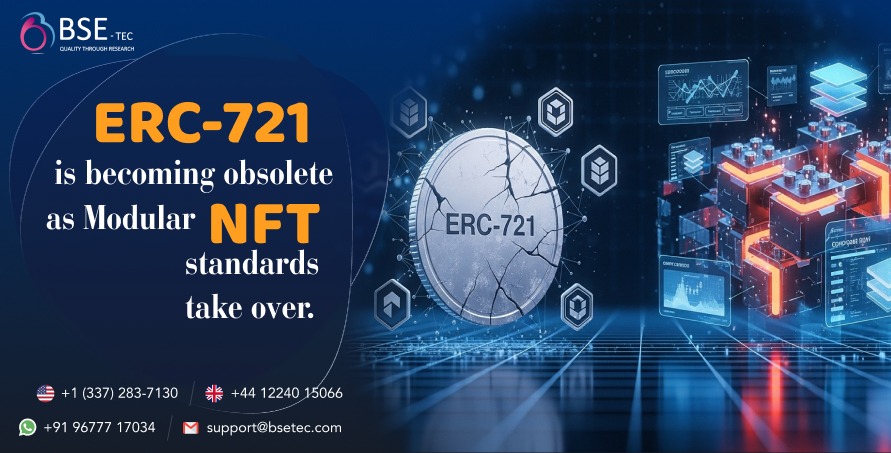
NFTs took the world by storm, turning digital ownership into a global phenomenon. At the core of this revolution was ERC-721—the standard that made unique digital assets possible on Ethereum. But the game is changing… ERC-721 is showing its limits as NFTs evolve into smarter, more flexible, and modular digital assets.
Where ERC-721 Starts Falling Short
ERC-721 is the foundation of NFTs, but it hits a wall when it comes to high-volume or complex use cases.
Here are the shortcomings:
- High Gas Costs — ERC-721 is expensive since every NFT is treated as unique, making large-scale minting costly on Ethereum.
- Efficiency Issues — No batch operations, so multiple transfers require multiple transactions, increasing time and cost.
- Rigid Structure — Not designed for semi-fungible assets, making it inefficient for use cases like gaming items.
- Metadata Limitations — Relies on off-chain storage, which can break if external links fail.
- Limited Built-in Utility — Lacks native support for features like rentals, royalties, or soulbound NFTs.
So the question becomes: if ERC-721 can’t support the next phase of NFTs, what comes next?
The Shift Toward Modular NFT Standards
The era of static NFTs is rapidly evolving. We are currently witnessing a fundamental shift from monolithic smart contracts to Modular NFT Standards.
Initially, NFTs were limited by rigid code; if you wanted to change a feature, you usually had to launch a new collection. However, the rise of standards like ERC-6551 and ERC-7401 has changed the game. Essentially, we are moving toward Lego-like architecture where functionalities—such as royalties, evolution, or utility—can be plugged in or swapped out.
As a result, developers can build more scalable applications while users enjoy assets that actually grow with them. This isn’t just a technical upgrade; it’s the infrastructure required for the next generation of Web3 gaming and decentralized identity.
At BSEtec, we are closely monitoring how these modular frameworks allow for more efficient, future-proof blockchain solutions. The goal is simple: code less, build more, and innovate faster.
And this isn’t just a small upgrade—it completely changes how NFTs can be built and used
Why Modular NFTs Are a Game Changer
Modular NFTs are a game-changer because they break the traditional mold of static digital assets. Instead of being a single, unchangeable file, they are built like digital Lego bricks.
Here is the short breakdown of why they matter:
- Unprecedented Customization: To begin with, modular NFTs allow owners to add, remove, or swap traits (like equipment or skills) without minting a brand-new token. This makes the asset evolve based on user interaction.
- Enhanced Interoperability: Furthermore, these assets can function across different platforms and games. Because the modules are standardized, a sword upgraded in one ecosystem could theoretically retain its attributes in another.
- On-Chain Logic: In addition to visual changes, modularity allows for nested NFTs, where one NFT can actually own other NFTs. This creates complex digital hierarchies, such as a character owning an inventory of items that are all individual on-chain assets.
- Long-term Value: Consequently, instead of an NFT becoming stale or outdated, its value can grow as the owner attaches rarer or more functional modules to it, keeping the asset relevant for years.
Modular NFTs shift digital ownership from collecting a finished product to curating an evolving asset.
These capabilities remove the limits on NFTs as static assets—they’re becoming something much bigger…
Real-World Use Cases Driving This Evolution
Modular standards (like ERC-6551) are replacing the static ERC-721 by turning NFTs into functional smart accounts. Instead of just being a digital picture, the NFT becomes a wallet that can own other assets.
Here are the short-form use cases driving this shift:
1. Unified Gaming Profiles: Beyond simple item ownership, modular NFTs allow a Character NFT to own its own equipment (swords, shields, skins). — When you sell your character, the entire inventory moves with it in one transaction.
2. Intelligent Digital Identity: Furthermore, these standards enable Identity NFTs that aggregate your on-chain reputation. — Your NFT can hold your university degrees, work certifications, and DAO voting power, acting as a portable, verifiable resume.-
3. Dynamic Phygital Goods: In addition, luxury brands use modularity to link physical products to digital perks. — A physical watch NFT can contain a digital twin for the metaverse and a separate loyalty pass for VIP events.
4. Interactive Media: Contrary to static MP3s, music NFTs can now be modular folders. — An album NFT can hold individual stems for remixing or automatically receive bonus tracks sent directly into the token by the artist.
5. Automated Finance: Lastly, in the DeFi space, modularity creates Basket NFTs. — One NFT can hold a diversified portfolio of different tokens, managing its own collateral and earning interest as a single tradable asset.
As use cases grow, outdated standards like ERC-721 hold businesses back.
Why Businesses Need to Move Beyond ERC-721
Businesses are outgrowing ERC-721 because it is too costly and technologically limited for high-volume operations.
First, ERC-721 is inefficient for bulk actions. Consequently, sending multiple items requires individual transactions, leading to astronomical gas fees that eat into profit margins.
Moreover, the standard is functionally rigid. In contrast, newer standards like ERC-1155 allow for batch transfers, enabling a business to send hundreds of items in a single transaction. This significantly streamlines logistics and reduces network congestion.
Furthermore, businesses now require smart assets. While ERC-721 tokens are static, newer frameworks allow NFTs to hold their own assets or evolve. Therefore, moving beyond the original standard is essential for creating dynamic loyalty programs or complex digital ecosystems.
But this shift needs more than tech—it demands the right expertise to build it right.
How BSEtec is Leading This Transformation
BSEtec drives the shift to modular NFTs by building scalable, future-ready blockchain solutions.
The Problem: Historically, ERC-721 tokens remained static; developers locked their attributes and functions after minting, which limited utility and increased technical debt.
The BSEtec Solution: In response, BSEtec implements a Legos-for-NFTs approach. By utilizing standards like ERC-6551 (Token Bound Accounts) and modular smart contracts, they allow NFTs to own assets, hold identities, and execute scripts independently.
Market Impact: Consequently, businesses don’t depend on a single chain or follow a rigid set of rules.BSEtec’s framework allows for hot-swapping features—such as adding a collateral module to a gaming NFT or a privacy module to a legal document.
The Three Pillars of Implementation
- Atomic Logic Separation: First, BSEtec separates the identity of the NFT from its behavior. This ensures the asset remains permanent while its capabilities can be upgraded.
- Cross-Chain Syncing: Next, they utilize modular interoperability protocols. This allows an NFT minted on Ethereum to gain utility modules on an App-Chain without losing its original provenance.
- Intent-Centric UX: Finally, they replace manual transactions with intent-based triggers. The NFT knows to unlock content or transfer rewards based on pre-set modular conditions, removing the friction of manual Sign requests.
With the right partner, this shift becomes less complex—and far more powerful
The Future of NFTs: From Assets to Intelligent Systems
NFTs are rapidly evolving from simple digital certificates into intelligent, interactive systems. While they began as static assets like art and collectibles, the integration of AI is now enabling these tokens to learn, respond, and adapt to their owners. Furthermore, this shift introduces programmable utility, where an NFT can act as an autonomous agent within metaverses or decentralized networks. Consequently, the focus is moving away from mere ownership toward functional value and real-time engagement. In essence, the future of NFTs lies in their transition from passive property to self-evolving digital entities.
Conclusion: The End of One Era, The Start of Another
ERC-721 once defined the NFT revolution—but as the space evolves, its limitations become impossible to ignore. Now, the momentum clearly shifts toward modular NFT standards that offer flexibility, scalability, and real-world utility.
More importantly, this isn’t just an upgrade—it’s a complete transformation of how digital assets are built and used. And as innovation accelerates, businesses that adapt early will lead the next wave of Web3.
So, what’s next? If you’re ready to move beyond limitations and build powerful, future-ready NFT solutions, BSEtec, a leading Blockchain development company, is the partner that gets you there.
Don’t just follow the future—build it with BSEtec.