The DeFi industry in 2026 is no longer chasing hype alone. Instead, the conversation has shifted toward something far more practical: capital efficiency. Today, investors, protocols, and institutions expect their assets to work across multiple layers of decentralized finance simultaneously rather than remaining idle in a single staking position. As a result, the market is actively searching for smarter ways to maximize yield, improve liquidity, and optimize asset utilization. That is exactly why Liquid Restaking Tokens are becoming one of the biggest financial innovations shaping modern crypto ecosystems.
Just a few years ago, traditional staking was considered enough, where users locked assets, earned rewards, and simply waited. However, today’s DeFi market has evolved rapidly with modular blockchains, AI-driven infrastructure, and multi-chain ecosystems. As a result, the demand for flexible and capital-efficient systems is growing, and idle capital is now seen as a missed opportunity.
That is where Liquid Restaking changes the game.
Why Liquid Restaking Is Dominating DeFi in 2026
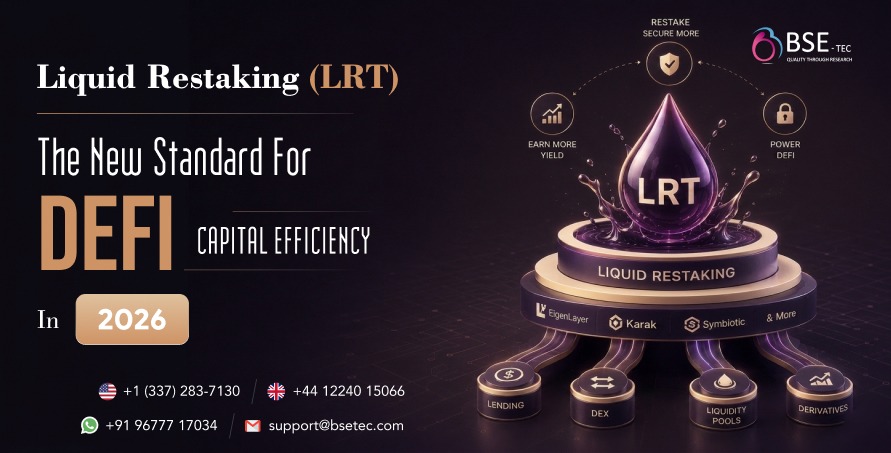
Liquid Restaking allows users to stake assets while still maintaining usable liquidity through derivative tokens. Instead of locking capital into a passive validator system, users receive LRTs that can continue generating yield across lending platforms, liquidity pools, derivatives markets, and cross-chain protocols.
This creates a layered earning model:
- Primary staking rewards
- Restaking rewards
- DeFi liquidity incentives
- Additional ecosystem yield opportunities
For investors, this means one asset can now perform multiple financial roles simultaneously.
In 2026, this is becoming the standard expectation inside decentralized finance ecosystems.
Protocols that fail to offer advanced liquidity utility are rapidly losing user attention because modern DeFi participants are focused on maximizing every dollar deployed on-chain.
The Rise of Modular Blockchain Economies
Another major reason behind the explosive growth of Liquid Restaking Tokens ecosystems is the rise of modular blockchain infrastructure. Today, networks are no longer operating as isolated chains. Instead, security layers, execution layers, data availability systems, and interoperability frameworks are becoming deeply interconnected.
Because of this evolution, Liquid Restaking is playing a critical role in securing modern blockchain ecosystems.
At the same time, validators and users can now extend economic security to emerging protocols without sacrificing liquidity access. As a result, ecosystems gain stronger decentralized security models while users receive better participation incentives. Furthermore, as blockchain technology continues to mature, the industry requires scalable security mechanisms that do not restrict capital flow.
This is exactly where LRT architecture provides an efficient solution.
Institutions Are Entering the LRT Economy
One of the biggest shifts happening in 2026 is institutional participation in advanced DeFi yield systems.
Crypto hedge funds, Web3 investment firms, fintech platforms, and tokenized asset managers are actively exploring Liquid Restaking infrastructure because it introduces:
- Better treasury utilization
- Improved yield optimization
- Enhanced liquidity access
- Flexible collateral management
- Multi-protocol exposure
Institutions are no longer satisfied with static staking returns. They are looking for dynamic capital deployment strategies that mirror sophisticated traditional financial markets.
This is creating huge demand for secure and scalable LRT ecosystems.
Security Is Becoming the Biggest Competitive Advantage
As billions of dollars flow into restaking ecosystems, security is becoming the deciding factor between successful and failed protocols.
Users are paying closer attention to:
- Smart contract audits
- Validator decentralization
- Slashing risk management
- Cross-chain bridge security
- Governance transparency
- Real-time monitoring infrastructure
In 2026, projects cannot survive on branding alone. Trust infrastructure matters more than marketing hype.
This is where experienced blockchain companies are increasingly gaining attention from startups and enterprises looking to launch next-generation DeFi platforms. As a result, businesses are prioritizing partners with strong expertise in scalable DeFi architecture and secure blockchain development.
How BSEtec Is Helping Build the Future of Liquid Restaking
As the DeFi market becomes increasingly competitive, businesses are actively searching for technology partners capable of building scalable and secure restaking ecosystems. Consequently, demand for advanced blockchain infrastructure and innovative staking solutions continues to grow.
BSEtec is positioning itself strongly in this evolving sector by delivering advanced blockchain infrastructure solutions tailored for modern decentralized finance platforms.
From smart contract architecture to staking ecosystem development, BSEtec focuses on helping businesses create high-performance DeFi products designed for real-world adoption rather than speculative experimentation.
Their expertise supports:
- Liquid Restaking platform development
- Yield optimization protocols
- Multi-chain DeFi integration
- Validator infrastructure systems
- Secure smart contract deployment
- Tokenized asset ecosystems
- Enterprise-grade blockchain scalability
As transaction volumes increase across decentralized ecosystems, businesses require infrastructure capable of handling high-frequency on-chain activity without compromising security or user experience. BSEtec’s blockchain development capabilities are helping DeFi startups and enterprises accelerate product launches while adapting to rapidly evolving market demands.
In today’s competitive environment, speed-to-market is becoming critical. Companies entering the LRT ecosystem need partners who understand both the technical architecture and the financial mechanics driving decentralized liquidity markets.
The Future of DeFi Capital Efficiency
The next phase of decentralized finance will not be defined simply by staking or yield farming. It will be driven by intelligent capital orchestration.
Liquid Restaking marks a major evolution in how blockchain ecosystems utilize digital assets. Traditionally, users had to choose between security participation and liquidity access. However, LRT models now combine both into a single financial framework, creating a more flexible and efficient blockchain experience.
That shift is transforming how modern DeFi economies operate.
Conclusion
In 2026, protocols that successfully integrate scalable restaking infrastructure, secure validator systems, and multi-chain liquidity accessibility are expected to dominate the next generation of decentralized finance.
And as adoption accelerates, companies like BSEtec are becoming key technology enablers, helping businesses build the infrastructure powering this new era of DeFi innovation.